
Most players don’t lose at real money slots because the games are unfair — they lose because they manage their money badly. Slot bankroll management isn’t about “winning systems.” It’s about staying alive long enough to let the math work instead of letting emotions destroy your balance.
This guide explains how U.S. players should size their bankroll, choose bet levels, and avoid the common mistakes that turn a playable session into a fast zero.
Why Bankroll Management Matters More for Slots Than Any Other Game
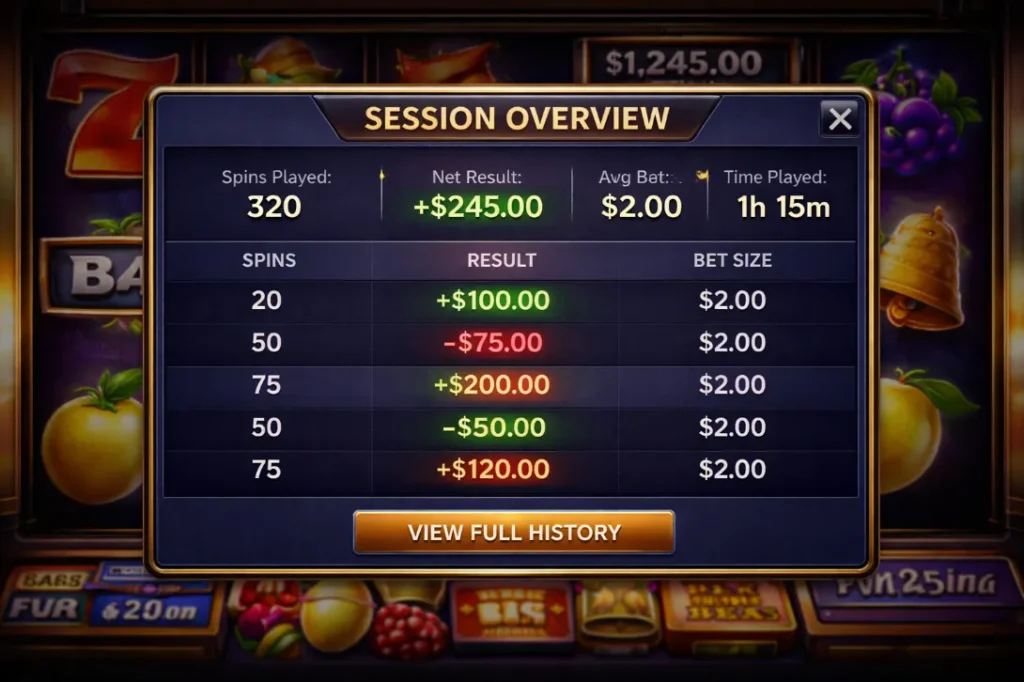
Slots are the most volatile games in the casino. Unlike blackjack or roulette, you don’t make decisions that affect the odds. Once you press spin, the outcome is locked — which means your only real control is how much you bet and how long you can survive variance.
This is why bankroll management is not optional for real money slot players. Without it, even a slot with solid RTP will drain you quickly. With it, you at least give yourself time to hit bonuses, features, or favorable streaks.
Hard Truth Most Players Ignore
- Slots do not “owe” you a win.
- Raising bets does not force bonuses.
- Short sessions feel lucky; long sessions reveal volatility.
- Most bankroll blowups happen emotionally, not mathematically.
What a Slot Bankroll Actually Is (And What It Isn’t)
Your slot bankroll is the amount of money you can afford to lose without changing your behavior. It is not your rent money, credit card limit, or the amount you “hope” to win back.
For real money slots, bankroll should be treated as session fuel. Once it’s gone, the session ends — not doubled, not chased, not “one last spin.”
| Player Type | Typical Mistake | Better Approach |
|---|---|---|
| Casual Player | Over-betting for excitement | Smaller bets, longer sessions |
| Bonus Chaser | Grinding high volatility slots | Match volatility to bankroll |
| High-Risk Player | Rapid bet escalation | Pre-set loss limits |
How RTP & Volatility Should Influence Your Bankroll
Bankroll management only works when you understand what you’re playing. RTP tells you what a slot returns over time, while volatility tells you how violent the swings will be.
A high-volatility slot with 96% RTP can still wipe out a poorly sized bankroll faster than a lower-volatility slot with slightly worse RTP. If this sounds backwards, read our breakdown of RTP, volatility & hit frequency before changing your bet size.
In Block B, we’ll get practical: exact bet sizing examples, session limits, stop-loss rules, and why chasing losses on slots almost always ends the same way.
How Much Should You Bet on Real Money Slots?
Bet size is the single biggest factor that decides whether a slot session lasts five minutes or an hour. The mistake most U.S. players make is choosing bets based on excitement instead of bankroll reality.
A simple rule that actually works: your standard slot bet should allow for at least 150–200 spins on your bankroll. Anything less, and normal volatility will wipe you out before the game has time to do anything meaningful.
| Total Bankroll | Safe Bet Range | Risk Level |
|---|---|---|
| $100 | $0.25 – $0.50 | Low–Medium |
| $500 | $1 – $2 | Medium |
| $1,000+ | $2 – $5 | Medium–High (controlled) |
Session Limits: When to Stop (Win or Lose)
Winning sessions don’t turn into profits because players stay disciplined — they turn into losses because players stay too long. That’s why every real money slot session should have two limits set before the first spin.
- Loss limit: usually 30–50% of your session bankroll.
- Win limit: cash out when you double your session bankroll.
- Time limit: fatigue kills discipline faster than bad luck.
Why Chasing Losses Always Fails on Slots
Slots do not adjust in your favor when you’re down. Increasing bets after losses only accelerates variance. This is how most bankrolls die — not slowly, but violently.
How Bankroll Strategy Connects to Where You Play
Good bankroll management only matters if you’re playing at casinos that actually pay. Fast withdrawals, reasonable bonus terms, and transparent rules all affect how safely you can manage your money.
We list and review these platforms on our main hub: Slots For Real Money US . Playing at the wrong casino can destroy even perfect bankroll discipline.
For an external, independent perspective on responsible gambling limits, you can also review the National Council on Problem Gambling’s guidance: National Council on Problem Gambling .
Final Takeaway: Control the Only Thing You Can
You can’t control outcomes, timing, or bonuses — but you can control bet size, session length, and casino choice. That’s what real slot bankroll management is about.
Slot Volatility Explained (This Is What Really Controls Risk)
If RTP tells you how much a slot pays back over the long run, volatility tells you how violently your balance moves along the way. This is the factor that determines whether a slot feels smooth and playable or brutal and unforgiving.
Volatility is essentially the distribution of wins. Low-volatility slots pay more often but in smaller amounts. High-volatility slots pay rarely, but when they do, the wins can be large enough to define an entire session. Most real money slot frustration comes from playing a volatility level that doesn’t match the bankroll.
| Volatility Level | Win Pattern | Session Feel | Bankroll Risk |
|---|---|---|---|
| Low | Frequent small wins | Smooth, steady | Lower |
| Medium | Mixed wins & bonuses | Balanced | Moderate |
| High | Rare but large payouts | Swingy, stressful | High |
Volatility vs Bankroll (Where Most Players Go Wrong)
Volatility only becomes a problem when bankroll size and bet size are ignored. A high-volatility slot isn’t “bad” by default — it’s bad when played with money that can’t survive the dry spells.
| Bankroll | Recommended Volatility | Why |
|---|---|---|
| Under $100 | Low | Preserves spins, reduces wipeouts |
| $100–$300 | Low–Medium | Allows bonuses without extreme swings |
| $300+ | Medium–High (controlled) | Can absorb variance without panic betting |
Classic Player Mistakes
- Jumping into high-volatility slots with minimum deposits.
- Increasing bet size after long losing streaks.
- Assuming a slot is “due” for a bonus.
- Confusing entertainment variance with unfair play.
Are RTP & Volatility Fixed? (Yes — and Here’s Proof)
One of the most persistent myths in online slots is that casinos can secretly adjust RTP or volatility for individual players. In properly licensed environments, this simply isn’t how modern slot software works.
Slot outcomes are generated by certified Random Number Generator (RNG) systems. These systems are tested by independent labs to ensure the math behaves exactly as published.
For a neutral, regulator-level explanation of RNG testing and certification, see: UK Gambling Commission – Random Number Generators . The UKGC doesn’t regulate U.S. offshore casinos, but the underlying slot technology and testing principles are the same.